

Daleen Roodt

José Fabricio Vargas

Angeline Khounlo
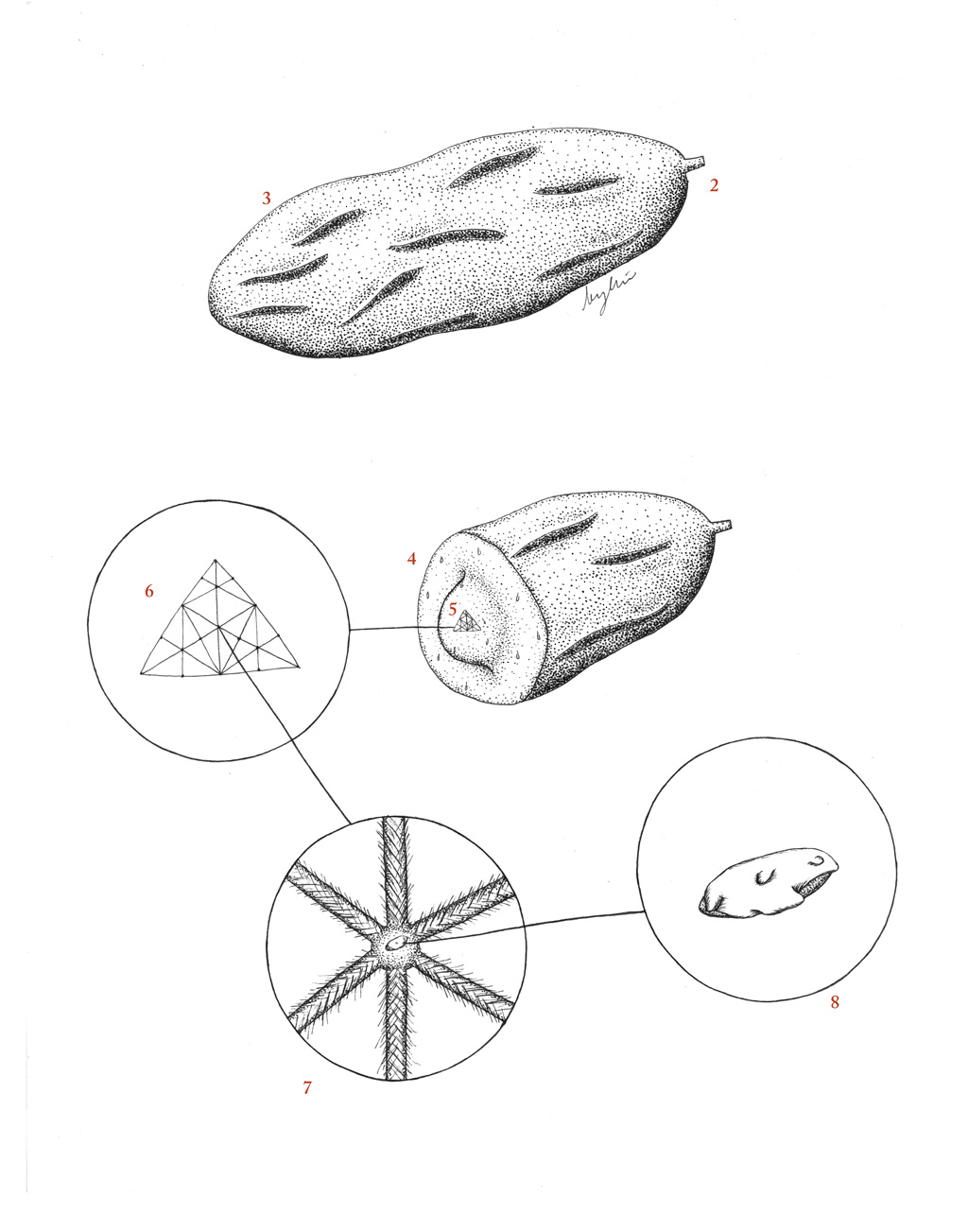
It is a soft and plasticky tube1 that tapers at the edges. A short stick2 is attached to one end. / Shallow grooves and small bumps3 are unevenly distributed over its surface. / It is filled with continuous wet matter,4 with no cavities. The closer to the core, the wetter. / Along the core runs a clammy circle,5 and in it an equilateral triangle6 made of fiber. / A perpendicular fiber7 grows from each vertex of the triangle. / The fibers intersect and form cells. Inside each cell, covered in mucous, a grain8 floats.


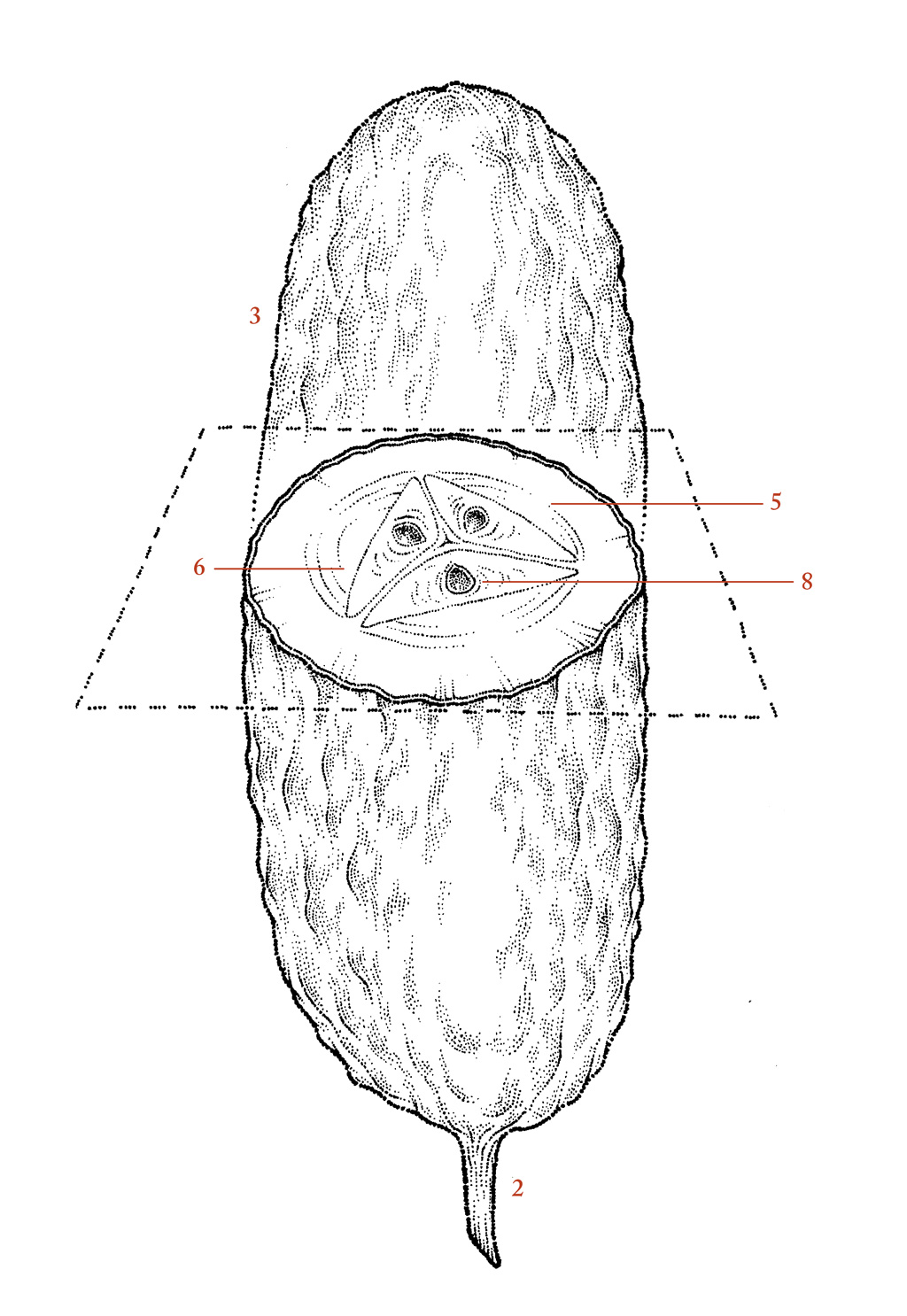
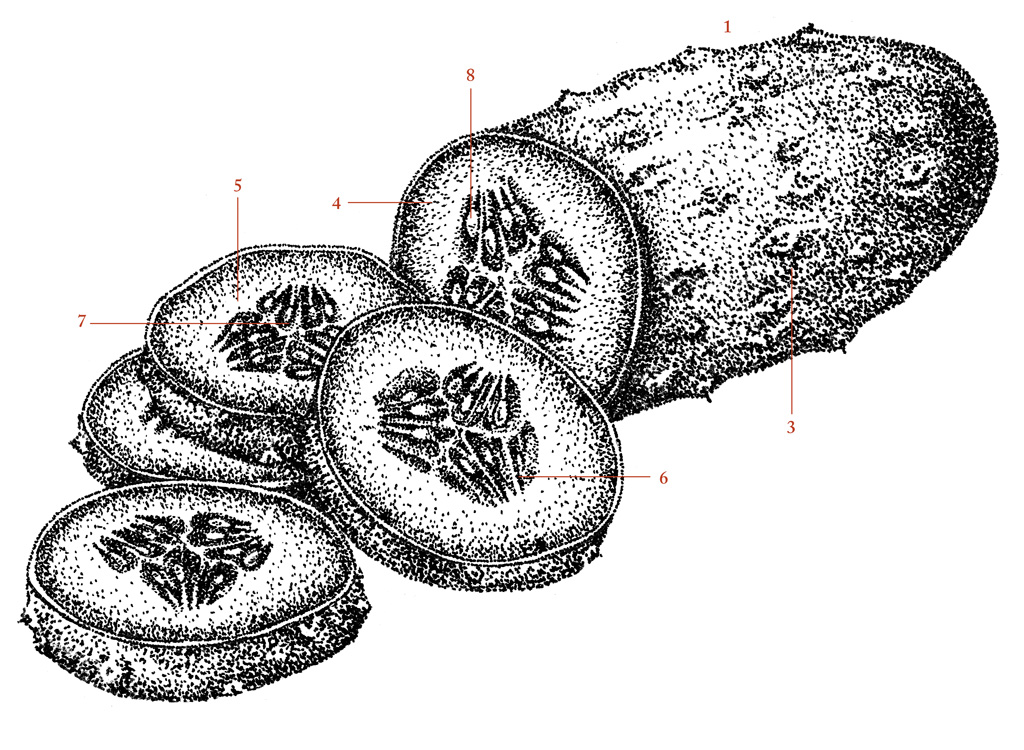
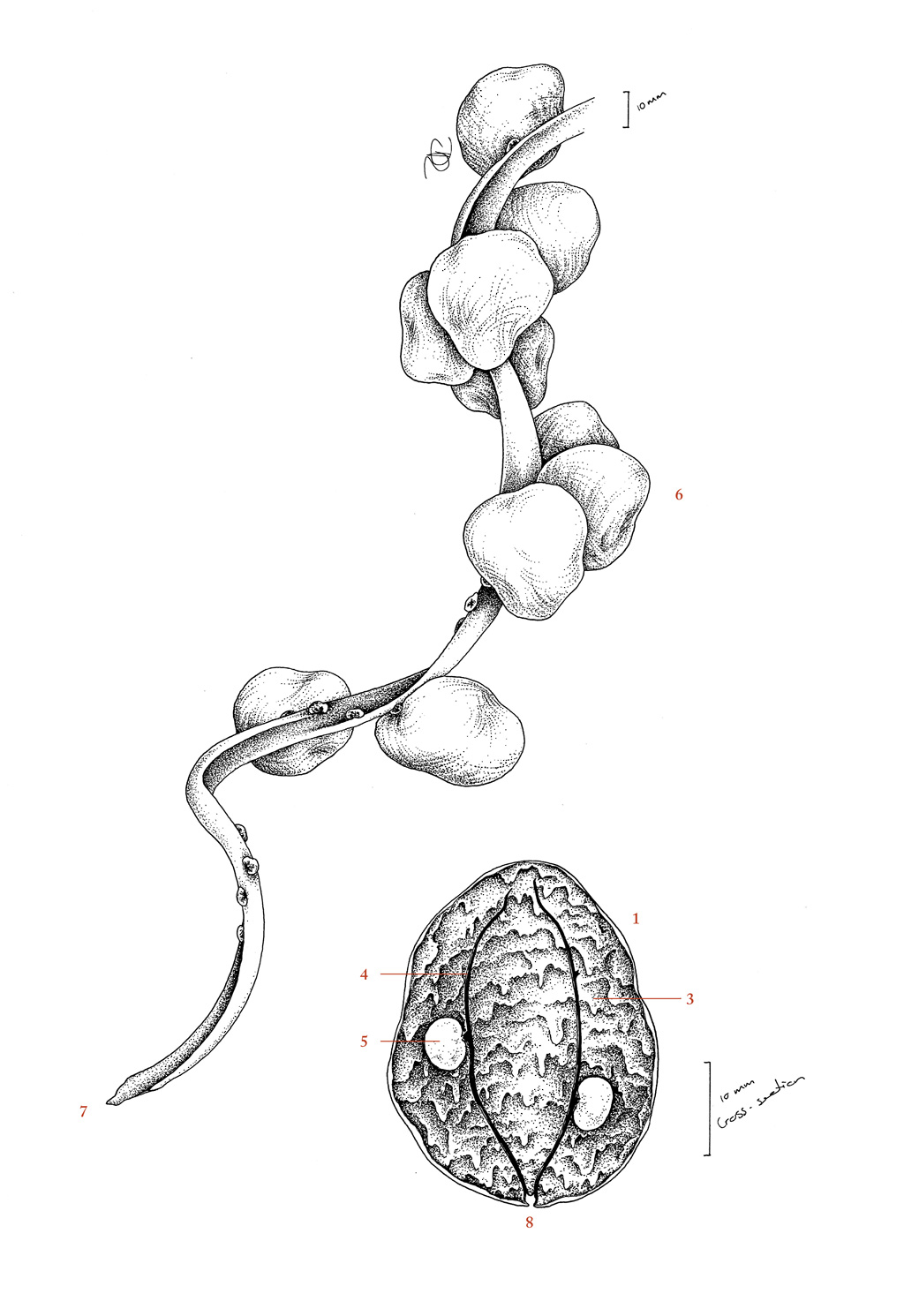
It is a soft and plasticky tube1 that tapers at the edges. A short stick2 is attached to one end. / Shallow grooves and small bumps3 are unevenly distributed over its surface. / It is filled with continuous wet matter,4 with no cavities. The closer to the core, the wetter. / Along the core runs a clammy circle,5 and in it an equilateral triangle6 made of fiber. / A perpendicular fiber7 grows from each vertex of the triangle. / The fibers intersect and form cells. Inside each cell, covered in mucous, a grain8 floats.

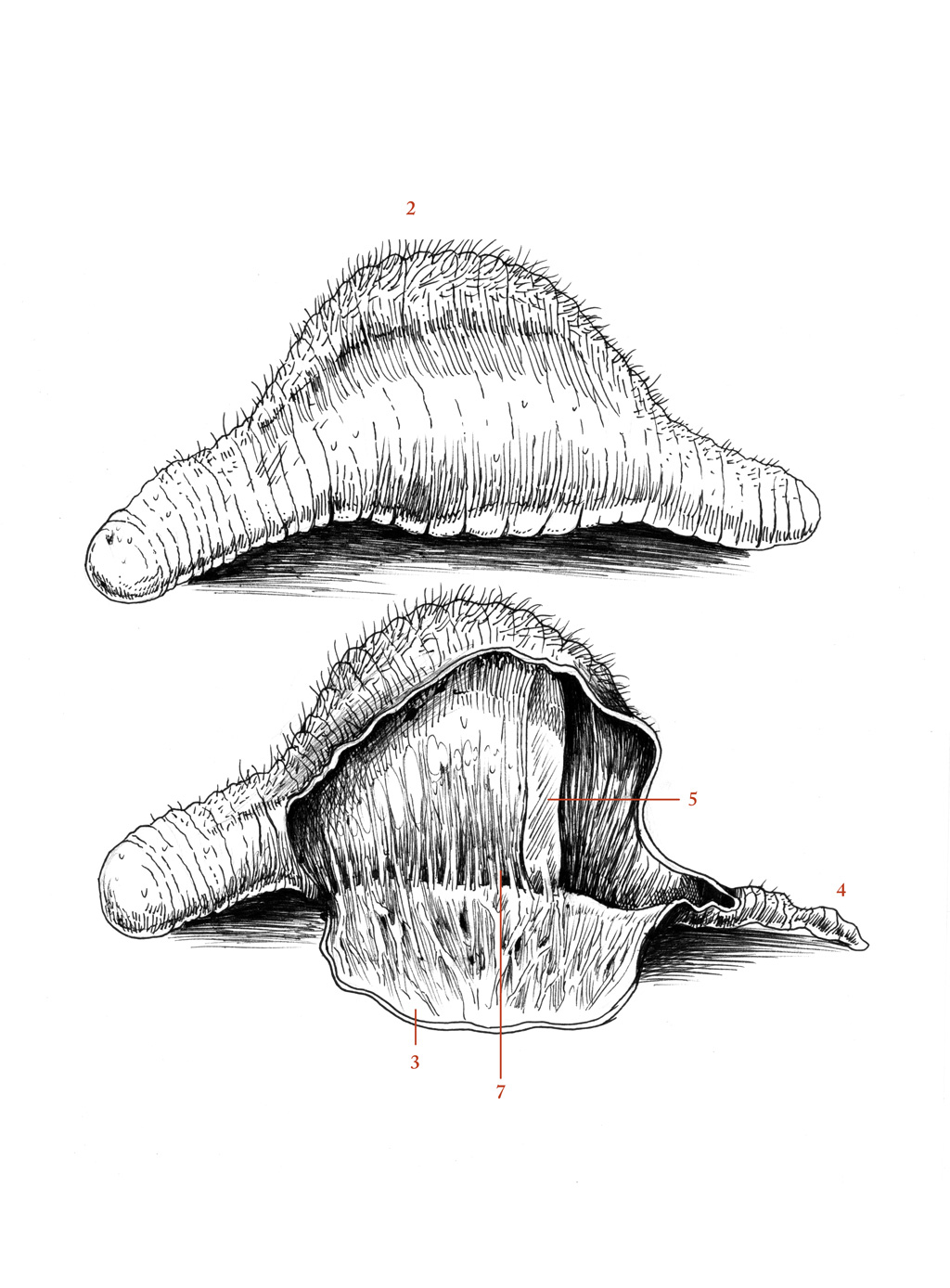
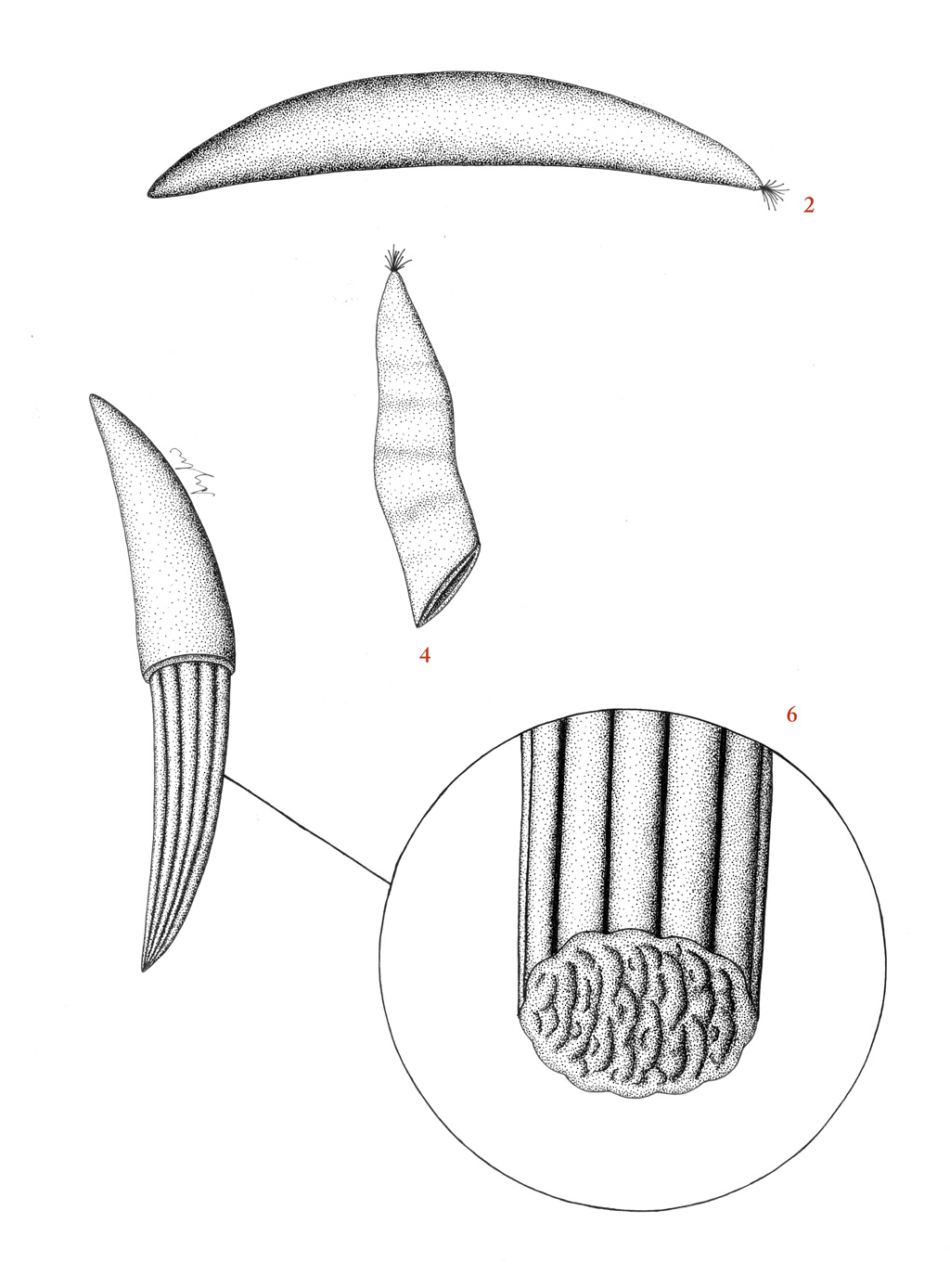
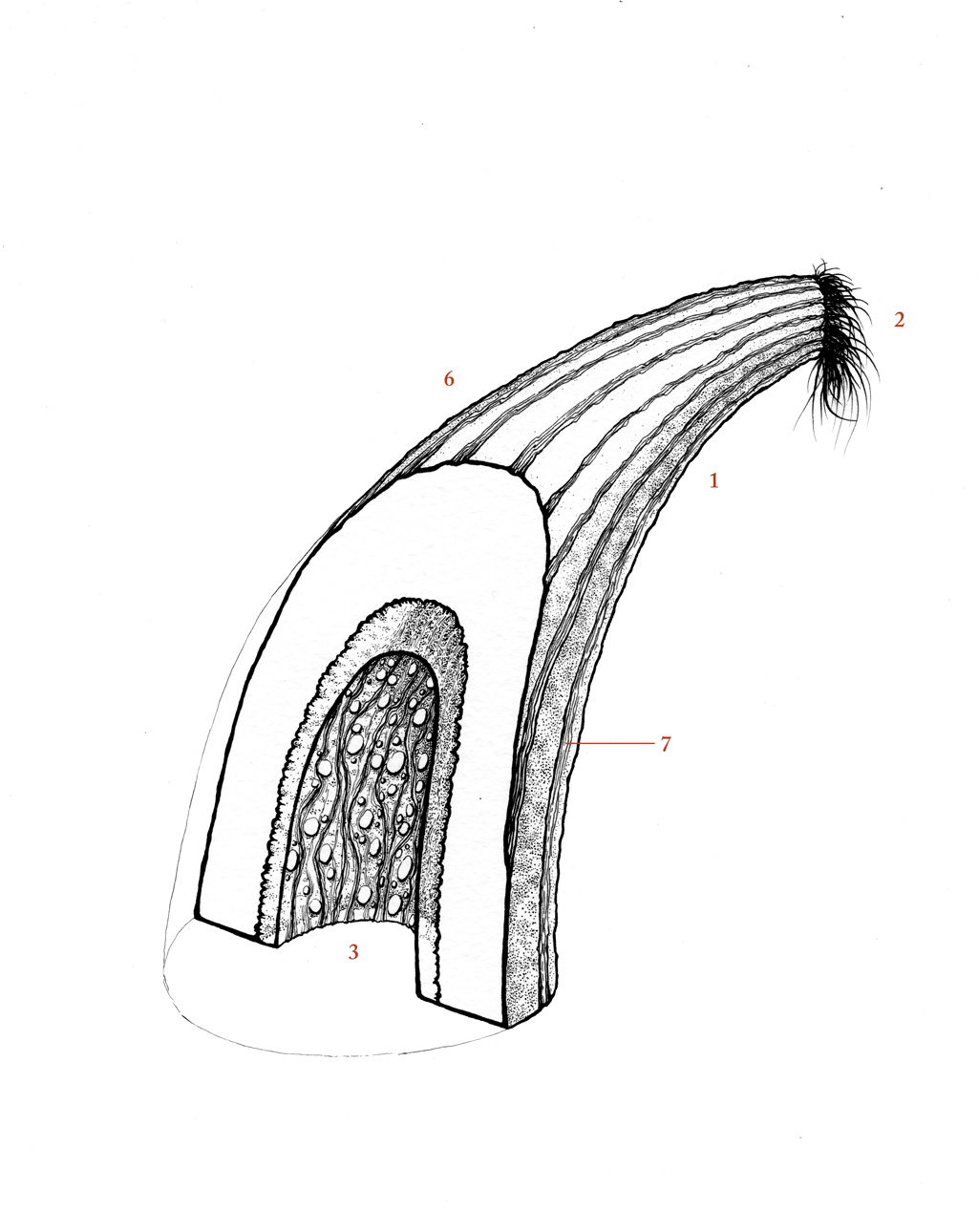


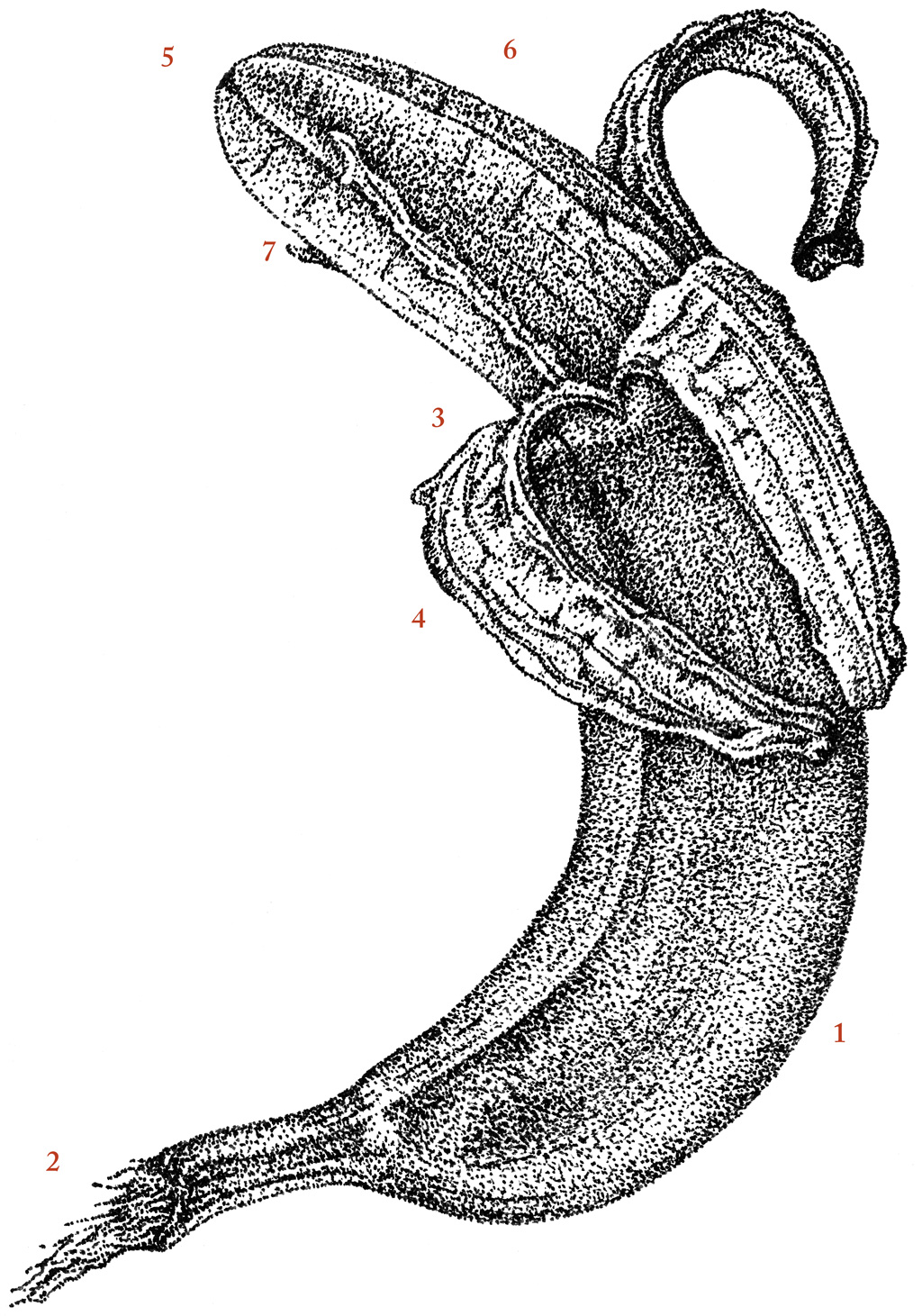
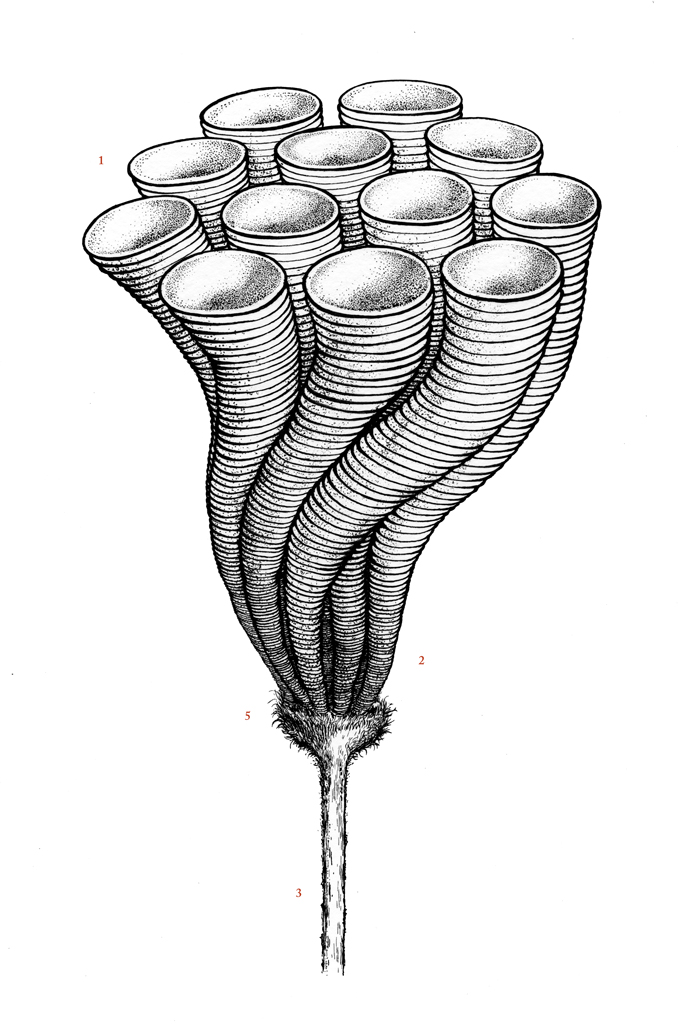
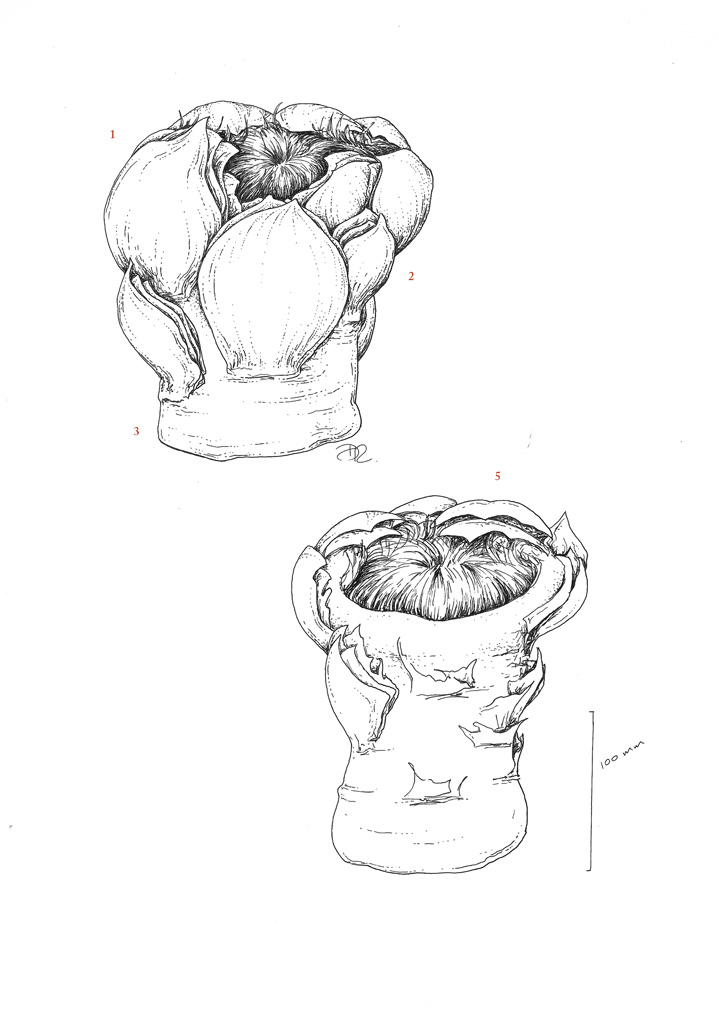
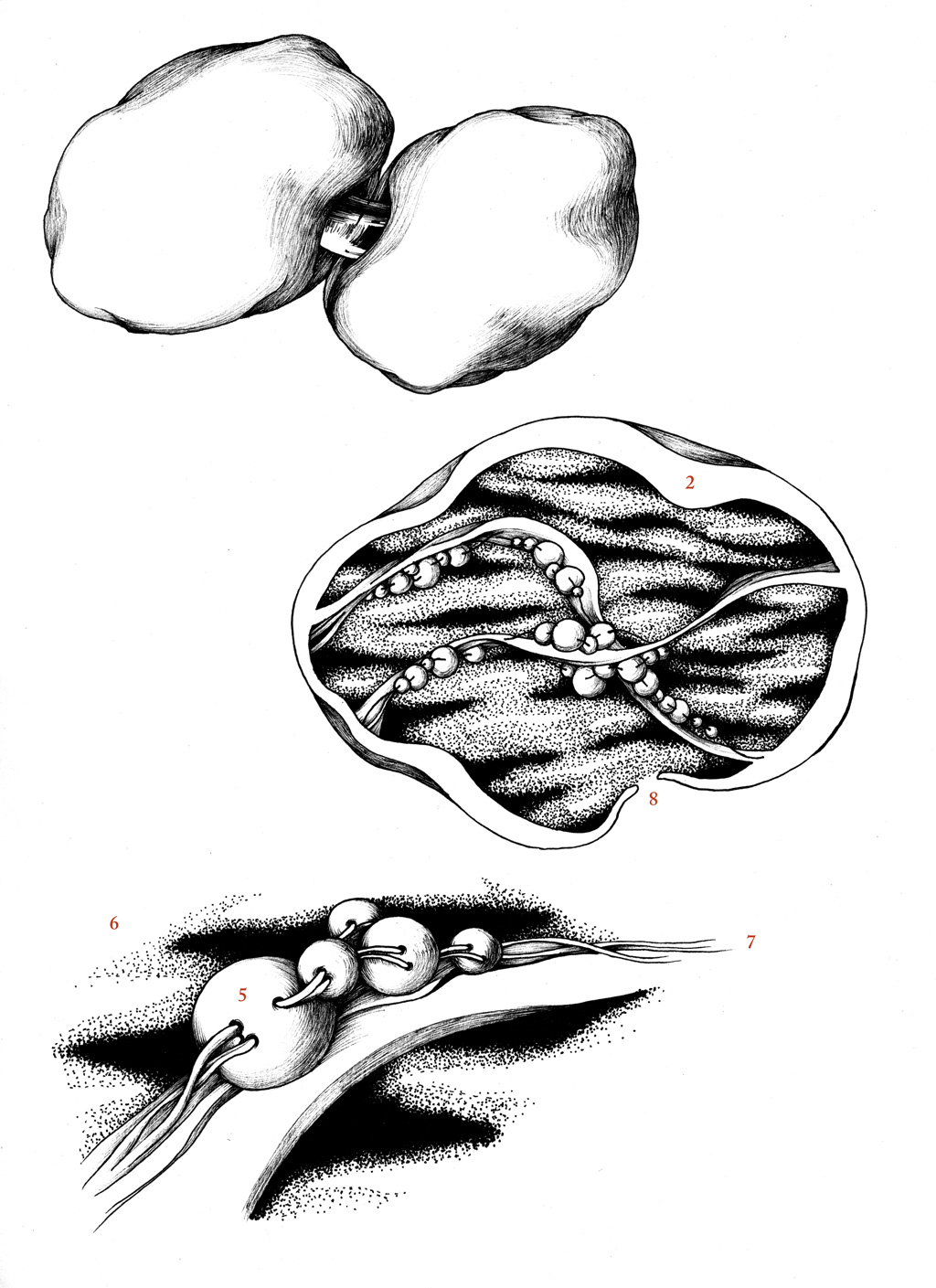
It’s a smooth and arched cylinder1 that tapers towards the edge. / On one end grows some short, downy hair2. / It is very squeezable and sometimes unevenly bruised. / Its inside and outside are distinct. The outer, waxy layer is easily detached, revealing a damp underside3. When detached, this layer collapses4 and loses shape. / Inside – a moist tube5. / The tube is vertically grooved with gentle clefts6. These are filled with long, sticky, detachable fibers7. / The cylinder is easily broken, but inside there is just more of the same – pasty, dank, solid matter.
Large concave scales, spoon-like,1 cover smaller scales. / Beneath each spoon another is hidden, and beneath the other, another. The internal scales are softer, folded upon themselves.2 The innermost scales are frail and tiny. / The spoons grow on a thick exposed pillar.3 Towards the top, beneath the protective coating of spoons, the pillar broadens into a hidden shallow bowl.4 / The bowl is filled with dense and downy hair.5
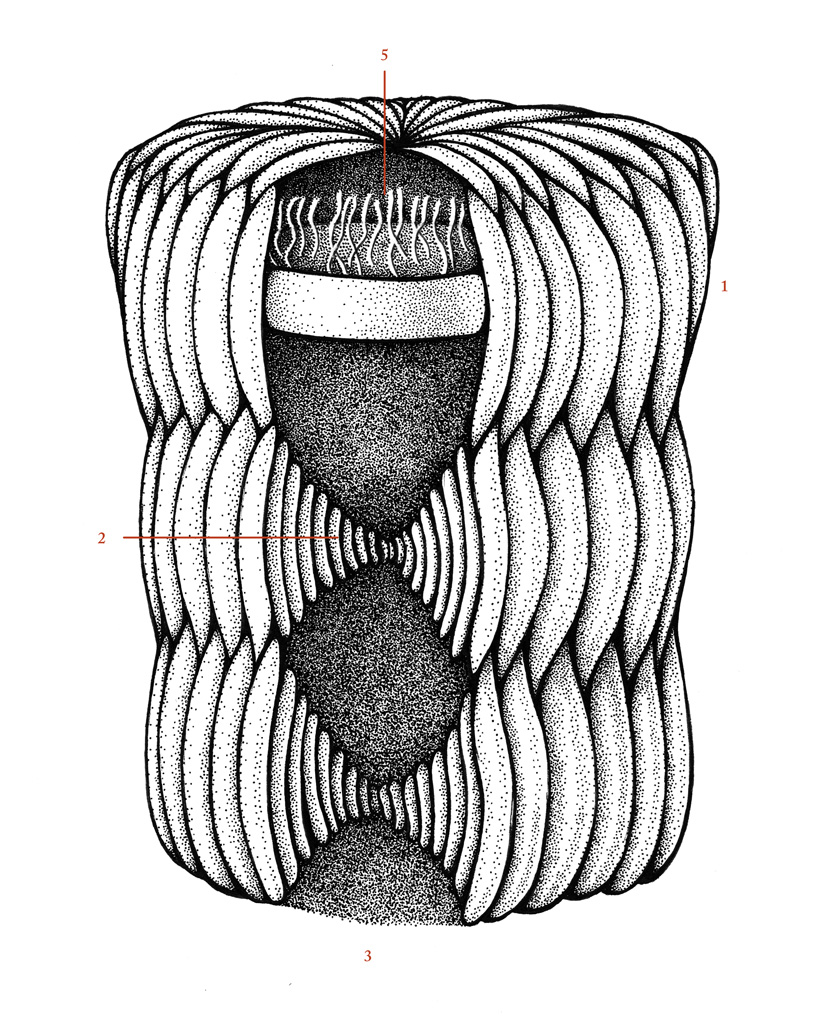
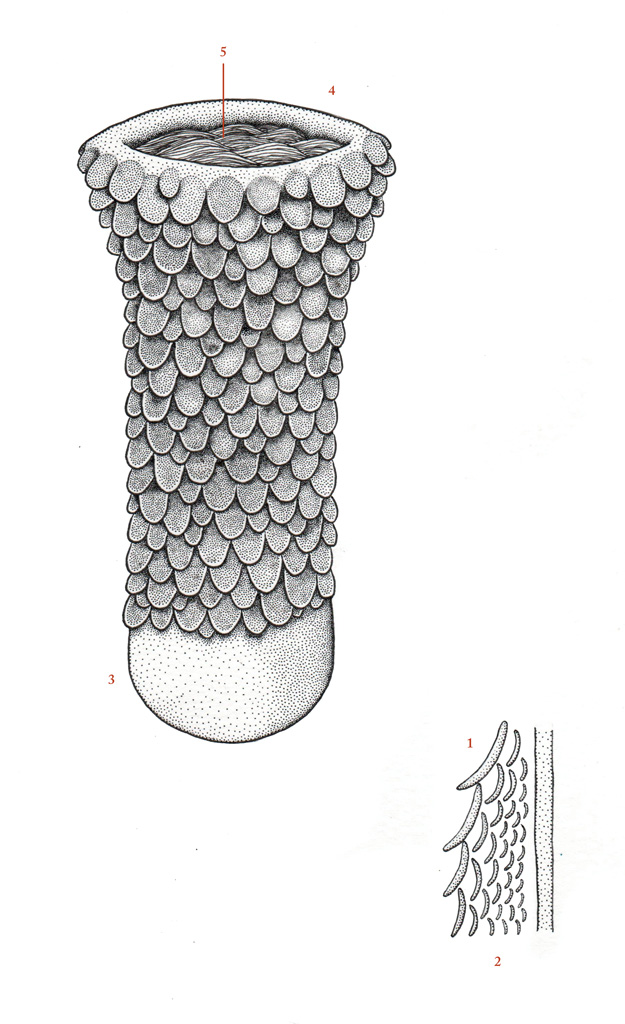
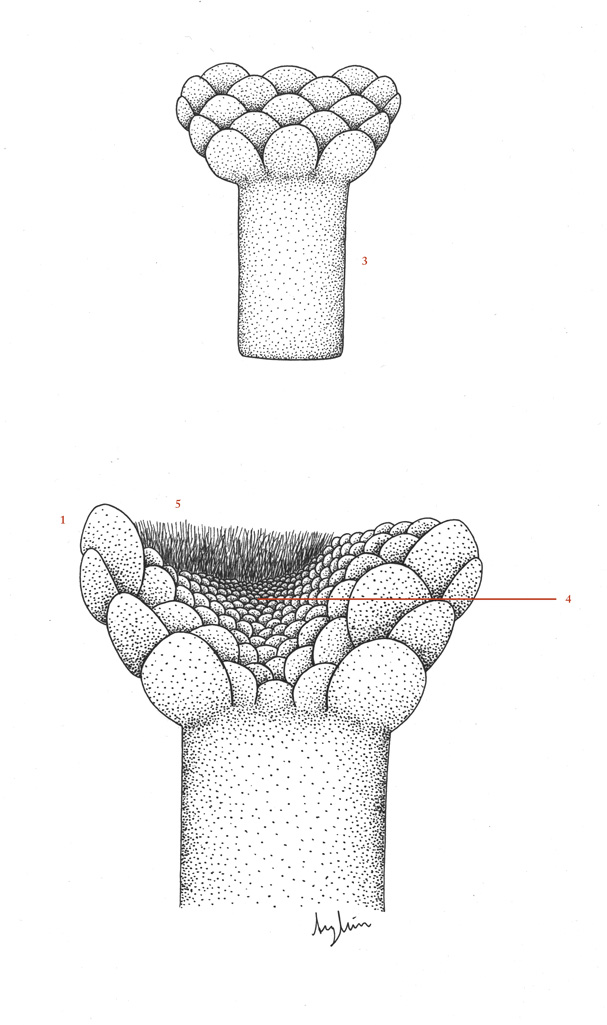


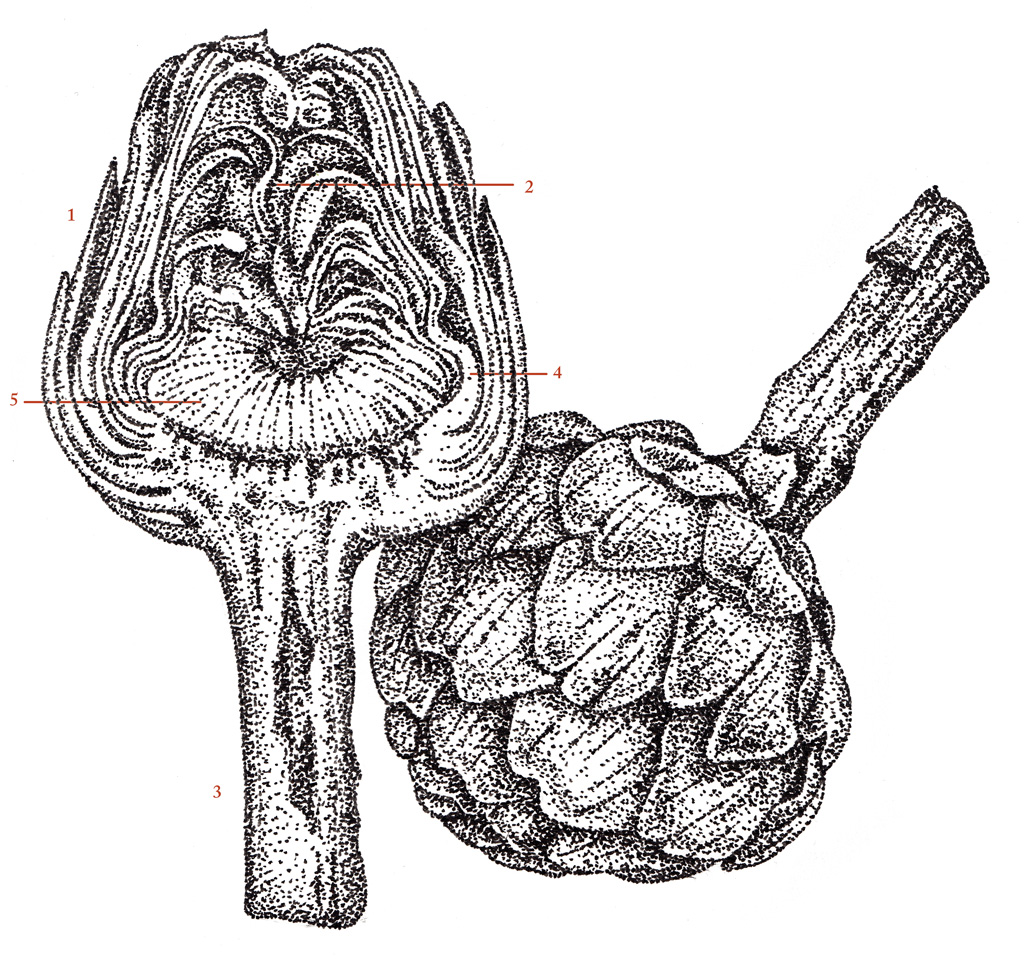
Large concave scales, spoon-like,1 cover smaller scales. / Beneath each spoon another is hidden, and beneath the other, another. The internal scales are softer, folded upon themselves.2 The innermost scales are frail and tiny. / The spoons grow on a thick exposed pillar.3 Towards the top, beneath the protective coating of spoons, the pillar broadens into a hidden shallow bowl.4 / The bowl is filled with dense and downy hair.5
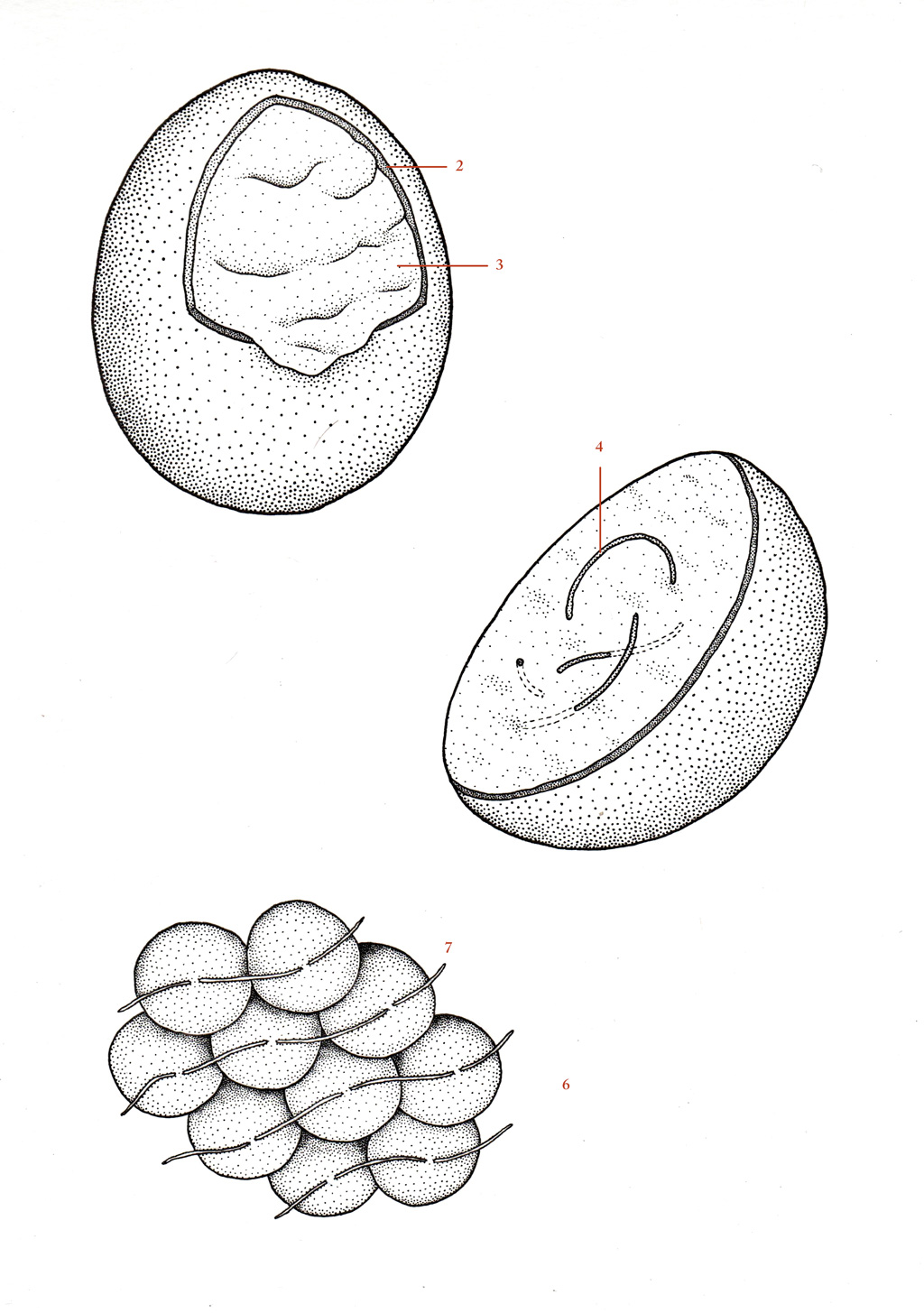
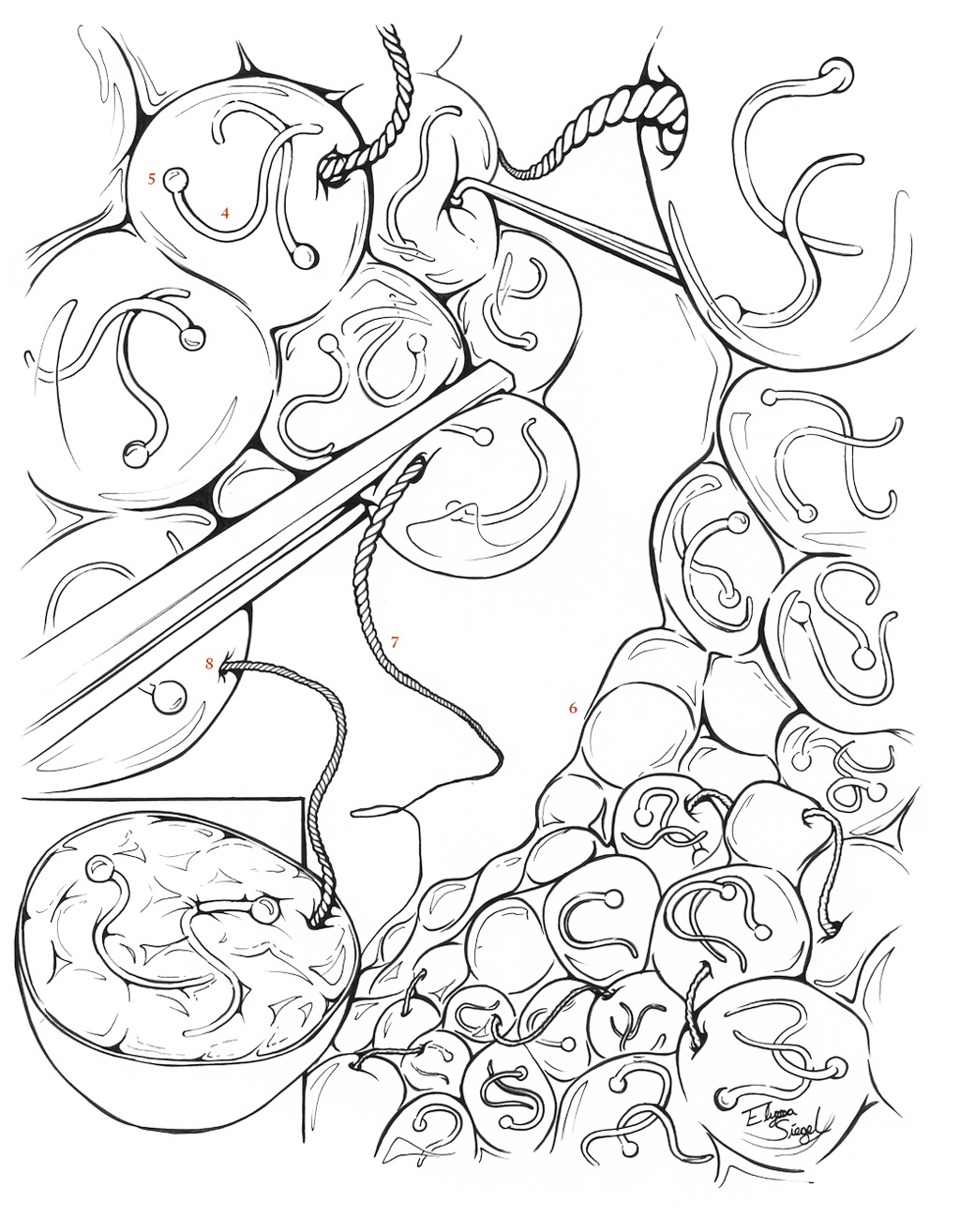
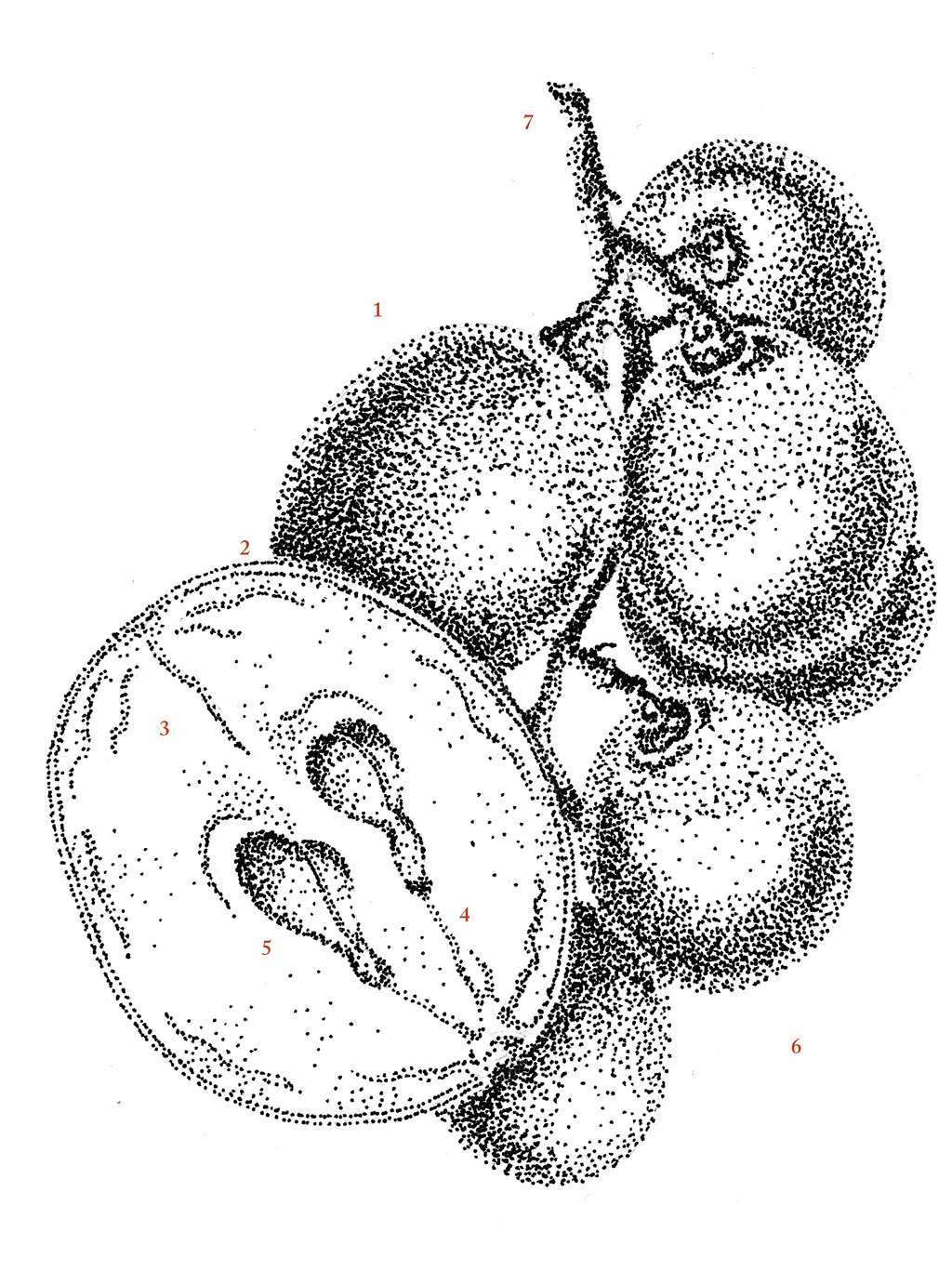
It’s a kind of small, puffy egg1. / It has skin2. Squeezed, the egg feels like it might easily pop. / Under the skin – slimy gel3, halfway between solid and liquid. / Inside this jelly dumpling lie four thin fibers4, and at their tip a kind of solid pea5. / Usually the eggs form large groups6, connected to each other by a woody thread7 through a tiny hole8 at their bottom side.
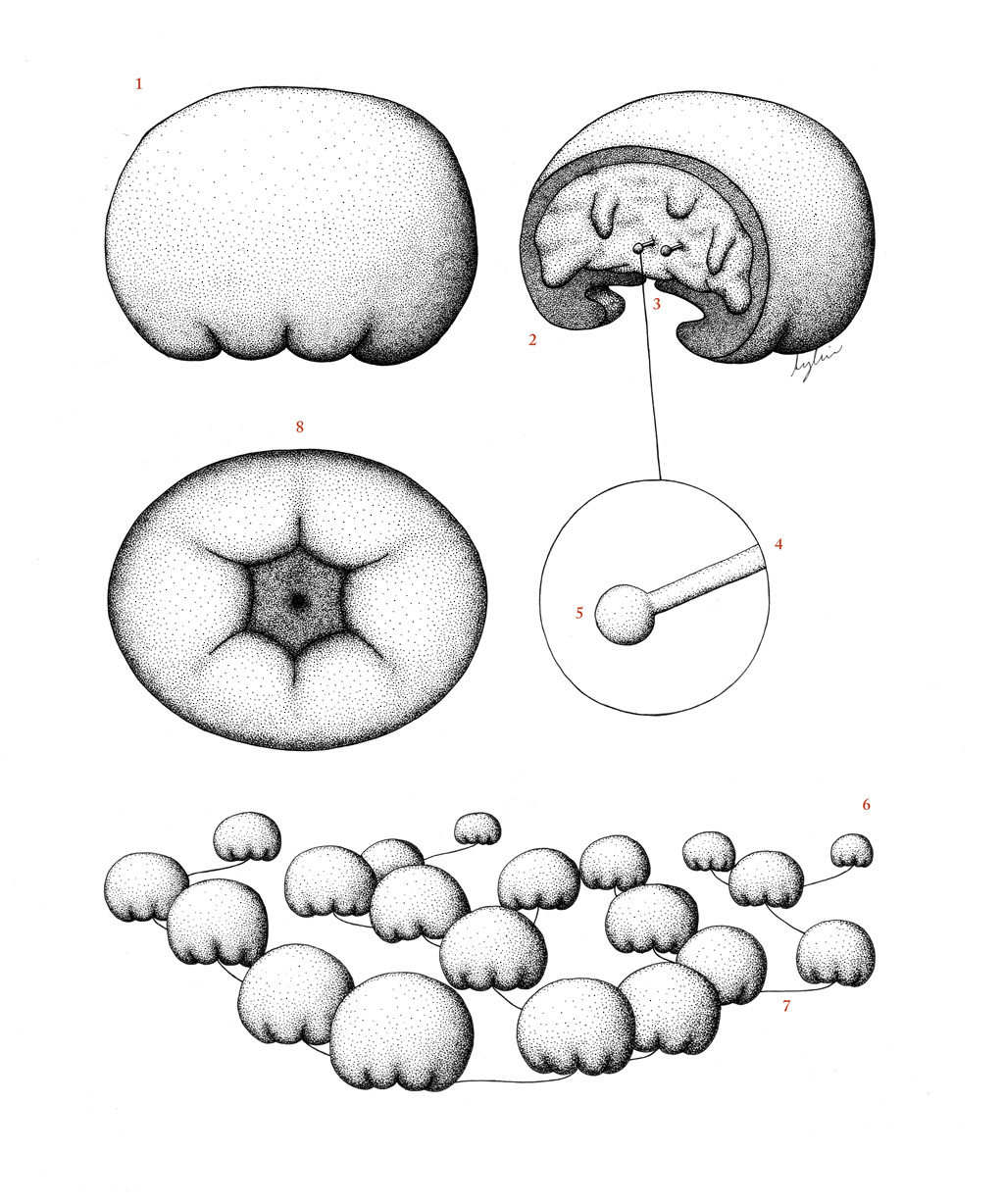


It’s a kind of small, puffy egg1. / It has skin2. Squeezed, the egg feels like it might easily pop. / Under the skin – slimy gel3, halfway between solid and liquid. / Inside this jelly dumpling lie four thin fibers4, and at their tip a kind of solid pea5. / Usually the eggs form large groups6, connected to each other by a woody thread7 through a tiny hole8 at their bottom side.


